

Welcome to the HornSports Forum
By registering with us, you'll be able to discuss, share and private message with other members of our Texas Longhorns message board community.
SignUp Now!You are using an out of date browser. It may not display this or other websites correctly.
You should upgrade or use an alternative browser.
You should upgrade or use an alternative browser.
Longhorn News/Discussion (Non-Recruiting)
- Thread starter Baron
- Start date


Sirhornsalot
**The Official Horn Sports Landscaper and Landscap
- Joined
- Nov 6, 2013
- Messages
- 34,783
I'll call it right now. OSU meets us in the championship game. And, lol, ou gets left out.
This is a pretty worthless update, it's the scenarios in the last bullet point that people are trying to figure out and they just say, we will figure those out after Friday. There are only 4 possible outcomes, it shouldn't be that hard to explain. I'll explain how a difference in interpretation of the rules could mean Texas is In or Out based on the interpretation in scenario 4.
Note, once the 1 seed is determined, the remaining teams in consideration start back at the beginning of the tiebreak protocol.
The bullet points starts with a Texas loss, putting us at 7-2 in conference.
1a. If KSU/OSU/OU all win, that creates a 4 team tie and all 4 teams have not played each other and no team has beaten the other 3. All 4 teams have next highest ranked common opponents of Iowa State and Kansas (if they win). If Kansas does win, UT and KSU would be 2-0 against those teams while OSU and OU would be 1-1. UT and KSU are then compared head to head and Texas earns the 1 seed.
1b. If Kansas doesn't win, the next highest ranked common opponent would be Iowa State who beat OSU. KSU/OU/UT would advance in the tiebreak and their next common opponent would be Kansas who beat OU. UT and KSU are then compared head to head and Texas earns the 1 seed.
- To determine the 2 seed, KSU/OSU/OU would be compared and OSU advances because they beat both KSU and OU.
2. If KSU/OSU win and OU loses, that creates a 3 team tie (KSU/OSU/UT) and all 3 teams have not played each other. None of the 3 teams have beaten the other 2 head to head. The highest ranked common opponents would be 5-4 Iowa State and 5-4 Kansas (if they win). Texas and KSU both beat Iowa State and Kansas (2-0 or 1-0) while OSU lost to Iowa State and beat Kansas and would be 1-1 or 0-1 (so the Kansas outcome doesn't matter). Texas and KSU advance in the tie-break and Texas wins the H2H for the 1 seed.
- To determine the 2 seed, KSU and OSU are compared and OSU gets the 2 seed since the won H2H.
3. If KSU/OU win and OSU losses, this creates a 3 team tie (KSU/OU/UT) and all 3 teams have not played each other and no team has beaten the other 2 head to head. The next highest ranked common opponent would be 5-4 Iowa State +/- Kansas. All 3 teams beat Iowa State so the next common opponent to consider is Kansas (regardless of if they win or not) who beat OU. UT and KSU are then compared head to head and Texas earns the 1 seed.
-To determine the 2 seed, KSU and OU are compared. They did not play head to head. Their highest ranked common opponent would be OSU who beat them both. If Kansas loses, Iowa State would be the next common opponent and both teams would have beat Iowa State. If Kansas wins, they would be considered at the same time as Iowa State and K-state would be the 2 seed since they beat Kansas while OU lost. If Kansas loses, they would be considered along with TCU (If TCU wins) and K-state would be 2-0, while OU would be 1-1 and K-state gets the 2 seed. If TCU loses, only the Kansas games would matter and K-state would be 1-0 and OU 0-1 and K-State gets the 2 seed.
4. If KSU loses and OSU/OU win, that creates a 3 team tie (OSU/OU/UT) and all 3 teams have not played each other. No team has beat the other 2. The highest ranked common opponent would be 6-3 Iowa State who beat OSU. OU and UT are then compared H2H and OU gets the 1 seed.
- To determine the 2 seed, OSU and UT are compared. They did not play head to head.
- Here is where the question arises, who is the next highest ranked common opponent? The teams have already been compared to OU in the 3 team tiebreaker. One interpretation is that OU is the highest ranked common opponent and OSU would get the 2 seed by having beat OU while Texas lost.
- Or, does "next highest ranked common opponent" mean you continue down the list of teams, not back up to OU. The highest ranked non-OU teams would be Iowa State who beat OSU +/- Kansas who lost to both OSU and Texas, and Texas would get the 2 seed either way.
The big issue is in scenario 4, what does "next highest ranked common opponent, proceeding through the standings" mean. Would a tie for 2nd place mean you first consider the team in 1st place a common opponent or do you only consider the teams in 4th place and lower?

Soldierhorn
Rookie
- Joined
- Nov 15, 2013
- Messages
- 1,589
BTW, if the big 12 is saying we have not clinched, that should answer the question about scenario 4 since we advance in all other scenarios. It would mean that scenario 4 would put OU and OSU through and not us and that answers the question regarding how they are interpreting "next highest ranked common opponent"This is a pretty worthless update, it's the scenarios in the last bullet point that people are trying to figure out and they just say, we will figure those out after Friday. There are only 4 possible outcomes, it shouldn't be that hard to explain. I'll explain how a difference in interpretation of the rules could mean Texas is In or Out based on the interpretation in scenario 4.
Note, once the 1 seed is determined, the remaining teams in consideration start back at the beginning of the tiebreak protocol.
The bullet points starts with a Texas loss, putting us at 7-2 in conference.
1a. If KSU/OSU/OU all win, that creates a 4 team tie and all 4 teams have not played each other and no team has beaten the other 3. All 4 teams have next highest ranked common opponents of Iowa State and Kansas (if they win). If Kansas does win, UT and KSU would be 2-0 against those teams while OSU and OU would be 1-1. UT and KSU are then compared head to head and Texas earns the 1 seed.
1b. If Kansas doesn't win, the next highest ranked common opponent would be Iowa State who beat OSU. KSU/OU/UT would advance in the tiebreak and their next common opponent would be Kansas who beat OU. UT and KSU are then compared head to head and Texas earns the 1 seed.
- To determine the 2 seed, KSU/OSU/OU would be compared and OSU advances because they beat both KSU and OU.
2. If KSU/OSU win and OU loses, that creates a 3 team tie (KSU/OSU/UT) and all 3 teams have not played each other. None of the 3 teams have beaten the other 2 head to head. The highest ranked common opponents would be 5-4 Iowa State and 5-4 Kansas (if they win). Texas and KSU both beat Iowa State and Kansas (2-0 or 1-0) while OSU lost to Iowa State and beat Kansas and would be 1-1 or 0-1 (so the Kansas outcome doesn't matter). Texas and KSU advance in the tie-break and Texas wins the H2H for the 1 seed.
- To determine the 2 seed, KSU and OSU are compared and OSU gets the 2 seed since the won H2H.
3. If KSU/OU win and OSU losses, this creates a 3 team tie (KSU/OU/UT) and all 3 teams have not played each other and no team has beaten the other 2 head to head. The next highest ranked common opponent would be 5-4 Iowa State +/- Kansas. All 3 teams beat Iowa State so the next common opponent to consider is Kansas (regardless of if they win or not) who beat OU. UT and KSU are then compared head to head and Texas earns the 1 seed.
-To determine the 2 seed, KSU and OU are compared. They did not play head to head. Their highest ranked common opponent would be OSU who beat them both. If Kansas loses, Iowa State would be the next common opponent and both teams would have beat Iowa State. If Kansas wins, they would be considered at the same time as Iowa State and K-state would be the 2 seed since they beat Kansas while OU lost. If Kansas loses, they would be considered along with TCU (If TCU wins) and K-state would be 2-0, while OU would be 1-1 and K-state gets the 2 seed. If TCU loses, only the Kansas games would matter and K-state would be 1-0 and OU 0-1 and K-State gets the 2 seed.
4. If KSU loses and OSU/OU win, that creates a 3 team tie (OSU/OU/UT) and all 3 teams have not played each other. No team has beat the other 2. The highest ranked common opponent would be 6-3 Iowa State who beat OSU. OU and UT are then compared H2H and OU gets the 1 seed.
- To determine the 2 seed, OSU and UT are compared. They did not play head to head.
- Here is where the question arises, who is the next highest ranked common opponent? The teams have already been compared to OU in the 3 team tiebreaker. One interpretation is that OU is the highest ranked common opponent and OSU would get the 2 seed by having beat OU while Texas lost.
- Or, does "next highest ranked common opponent" mean you continue down the list of teams, not back up to OU. The highest ranked non-OU teams would be Iowa State who beat OSU +/- Kansas who lost to both OSU and Texas, and Texas would get the 2 seed either way.
The big issue is in scenario 4, what does "next highest ranked common opponent, proceeding through the standings" mean. Would a tie for 2nd place mean you first consider the team in 1st place a common opponent or do you only consider the teams in 4th place and lower?

bctex1106
Well-known member
- Joined
- Jan 1, 2015
- Messages
- 767
So basically, outside of winning on Friday, we need KSU to beat ISU.BTW, if the big 12 is saying we have not clinched, that should answer the question about scenario 4 since we advance in all other scenarios. It would mean that scenario 4 would put OU and OSU through and not us and that answers the question regarding how they are interpreting "next highest ranked common opponent"
A Texas or KSU win, or OSU or OU loss would put Texas through.So basically, outside of winning on Friday, we need KSU to beat ISU.


tejasrulz
Well-known member
- Joined
- Oct 30, 2014
- Messages
- 6,702
Still can’t believe a B12 commissioner said this
He's a tool for saying that and openly rooting for Tech to win the game vs Texas.
Gbenda had himself a game against ISU!
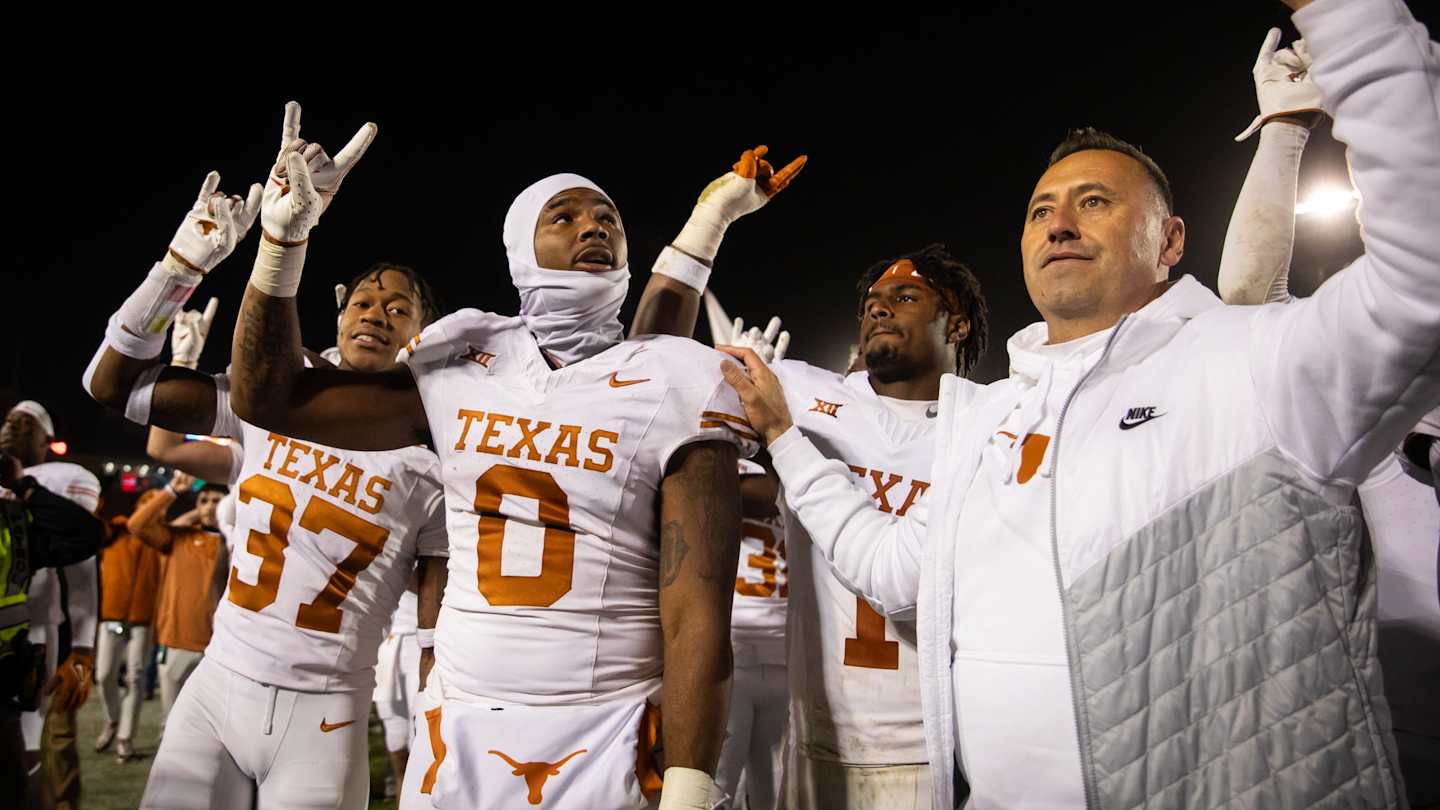
Love this comment from Sark:
"Hopefully we put on a heck of a show for him. That's what I want. He's the commissioner of our conference, and I'm hopeful that when he watches us play he's proud of the way that we play representing the Big 12 because that's the conference we're in right now."
 www.si.com
"Hopefully we put on a heck of a show for him. That's what I want. He's the commissioner of our conference, and I'm hopeful that when he watches us play he's proud of the way that we play representing the Big 12 because that's the conference we're in right now."
Steve Sarkisian Reacts To Big 12 Commissioner Brett Yorkmark Attending Texas Longhorns vs. Texas Tech Red Raiders
Steve Sarkisian Reacts To Big 12 Commissioner Brett Yorkmark Attending Texas Longhorns vs. Texas Tech Red Raiders
www.si.com




About Us
