
Welcome to the HornSports Forum

By registering with us, you'll be able to discuss, share and private message with other members of our Texas Longhorns message board community.

SignUp Now!

September Landscapes: What are those holes in my turf?

Sirhornsalot

**The Official Horn Sports Landscaper and Landscap
Joined
Nov 6, 2013
Messages
34,560
0ow8gisnvul9sllxhi1r7g3v5soh.webp

September Landscapes: Why are there holes in my turf?

I wrote just two months ago how Chinch bugs weren’t as big of a problem this year for our North Texas lawns.

Not so fast. They were late to the party this year compared to years past, but they have arrived with an impact in a short time.

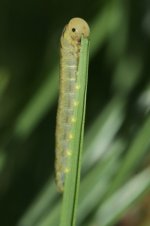
But there is another critter out there that is making its biggest impact in years – the Sod Web Worm. This worm has been relatively quiet for the past 10 years. I’ve only responded to a handful of cases to 2026. But this year, I’ve seen about three times as much.

They aren’t as fast to damage your turf like the Chinch bug is, but they unfortunately go undetected which allows them to cause damage in the lawn.

The Sod Web Worm is called such because they will take the thatch of the grass and spin a web-like contraption using a silk-like substance they create. They live at the soil surface through the day which is why we never see them during that time. They emerge from their protected location at nightfall and feed on the turf during the night.

By the time you see your lawn again, they’re already back down to soil level.

This means it is hard to kill these pests with a liquid spray unless you’re willing to spray them at night or late evening when they’re out on the turf. So a granular application of either Bifenthrin or Permethrin can be applied during the daylight hours. Once applied, the product must be watered in immediately (before nightfall) so that our product can be dissolved and seep down to the worms.

We do this during the day because we can know where they are at and can target that location with a granular remedy.

prevent-sod-web-worm.webp

How do I know if I have Sod Web Worms?

There are a couple of ways of detecting them during daylight hours. First, walk through your lawn. If you see little white moths fly up as you walk, it is likely you have sod web worms. These are lawn moths and they lay the larvae that becomes the sod web worm.

Secondly, as you walk through your turf, you may notice small finger-sized holes in the turf, sometimes with the silk and thatch combo webbing visible. These are also indicative of the presence of sod web worms.

And of course, you will notice deteriorating grass.

As I’ve mentioned before, Chinch bugs are always found in direct sun locations. You won’t see them in shaded areas at all. However, Sod Web Worms can be found in both sunny and shaded locations.
SOD-WEBWORM-LARVAE-FEEDING.jpg

How does my lawn get Sod Web Worms?

It starts with one house on the block where the the moths land and begin laying larvae. Then the moths will slowly fly from lawn to lawn. This makes things difficult for homeowners because when one lawn is treated and the web worms killed, that lawn is still at risk because of the population still residing up and down the street.

So more than one application is likely necessary, about two weeks apart.

The lawn moths that lay the larvae do so a few times during the summer. They usually lay their larvae in late summer, too before the process ends.

The same products that kill sod web worms can also be used in liquid form to kill Chinch bugs. We use a liquid in their case because they spend most of their time on the ends of grass blades, sucking moisture from the grass plant. So hitting them with a spray is a rather easy kill. This treatment should be done twice, one week apart. The first spray kills the Chinch bugs. They second spray kills the hatchlings that appeared after your first spray.


Chinch bugs

Chinch bugs have made a late surge this year. Their damage is now appearing in almost every neighborhood I go into. You can determine their presence by the damage they leave behind. They only feed in full sun areas of the lawn. Damage is often located either in the center of the lawn, or near materials that hold and reverberate heat, such as concrete sidewalks, driveways, stone or metal bordering, etc. The hotter it is, the more they will feed.

You can kill the Chinch bugs by spraying bifenthrin or permethrine products, where they are the active chemical. Spray the damged areas and also at least a foot into the green grass to stop their migration. The procedure is over as soon as the chemical dries, which can be only minutes. This is a contact kill so we don't really need it to hang around.

Once you've done the first spraying, you will need to repeat the spraying one week later to kill whatever eggs may have hatched and to get them before thy lay new eggs.


Fertilization and Pre-emergent

If you have not applied these products to your lawn, there is still time. A few things on this:

1. If you intend to sew winter rye in your lawn in October or November, do NOT apply pre-emergent to your lawn. This product will stop the winter rye seed from germinating.

2. For your fertilization, reduce your spreader setting by one notch for this application. The nitrogen in fertilizer helps fuel lawn fungus during October when night time temperatures are conducive to fungus growth. Reducing the setting will get your lawn green without contributing to the set up of fungus conditions later.

3. Once you’ve completed both applications, water immediately and repeat the next day. This insures the products get into the soil and begin working.


Prime Planting Time!

September, October and November are excellent for planting new shrubs and trees. Doing so allows them to spend the next few months getting acclimating to their new surroundings without the stress of heat.

Shrubs and trees get a real head start for the next growing season because they are established and can hit the ground running when spring arrives.

Winter weather is not much of a concern as long as we mulch our plants and trees going into Fall.


Birds of a bird bath

With the hot and dry weather, please remember to keep your bird baths clean and full. Help our little friends out as they get hot and parched just like we do.
 
The holes in my turf are armadillos and skunks. :ROFLMAO:

Beleive it or not, I had a skunk on my front porch two nights ago. I walked out and we spotted each otheer at the same time. We both froze lol. I walked back into the house slowly.

The armadillos are going after the grub larvae.
 
Beleive it or not, I had a skunk on my front porch two nights ago. I walked out and we spotted each otheer at the same time. We both froze lol. I walked back into the house slowly.

The armadillos are going after the grub larvae.
I had a stand off with a coon on my patio. Luckily the sliding glass door was between us.
 
I have about 50 holes in my yard that range from about an inch in diameter to 6 inches in diameter. They are all from land crabs that come from the beach dunes and burrow in my yard. Any suggestions other than move? The house is already for sale.
 
I have about 50 holes in my yard that range from about an inch in diameter to 6 inches in diameter. They are all from land crabs that come from the beach dunes and burrow in my yard. Any suggestions other than move? The house is already for sale.

You can bait and trap them, using glass jars buried halfway into the ground. Bait with something smelly like shrimp. Mix the bait with mud.

You can also put a net over the yard.

I confess this is a problem I've never dealt with. lol
 
You can bait and trap them, using glass jars buried halfway into the ground. Bait with something smelly like shrimp. Mix the bait with mud.

You can also put a net over the yard.

I confess this is a problem I've never dealt with. lol
Thanks for your suggestions. I appreciate it. I will try the traps. The net would not work because the crabs burrow in from underneath and come up into the yard. It’s a unique problem that I have no experience with either. I read somewhere that if you peed in their holes they wouldn’t come back but I can now tell you from experience that that doesn’t work.
 
Since you seemed to enjoy my last question, how about delving into more gardening in Mexico? The Iguanas that live in my coconut palms love to climb down and eat my bougainvillea bushes. Any suggestions that don’t involve poison? I like the Iguanas🦎.
 
Since you seemed to enjoy my last question, how about delving into more gardening in Mexico? The Iguanas that live in my coconut palms love to climb down and eat my bougainvillea bushes. Any suggestions that don’t involve poison? I like the Iguanas🦎.

You'll need to part ways with the Bougainvillea, as we know they are attracted to it.

Go to a different vine instead, something they do not like.

Potato Vine offers soft clusters of baby blue or white flowers. It is Iguana restistant. Pandora Vine is nice and has trumpet shaped blooms that come in either white or pink. It is Iguana resistant. Milkweed Vine is one Iguanas avoid, but has aromomatic star-shaped flowers that are nice.

If you have to have the Bougainvilea, I would install a metal barrier that is at least 18 inches high to keep them off the foliage. The metal needs to be smooth, to prevent them from climbing. Bend the metal around the trunk of the vine to cover it on all sides.
 
Last edited:
I have a confused crabapple tree. It started blooming again. What's up with that?

She's not confused. She's happy. Sometimes they will have a second bloom period, which may or may not produce fruit. That will depend on what type of Fall we have.

We're supposed to have a wet, cool Fall this year, so that is promising.
 
Newbie to this board:
I have a question about getting rid of moles in my yard. Neighbor moved out months ago and his house is still for sale. Why they were there, no problem. This neighbor had a loud, yappie dog so I would guess that critters would have been scarred away.

Several weeks ago, I started seeing mounds in my yard -- about a dozen now. I have put down castor oil pellets and used a sonic device to irritate and encourage them to move on. That didn't deter them. Then I found some of their fresh tunnels and put some poison in them. That might have worked since I haven't seen any recent fresh molehills.

Before I go full Caddyshack on them (yeah that old), I was looking for any other advice.

Suggestions are appreciated. Thank you.

Hook 'em
 
Newbie to this board:
I have a question about getting rid of moles in my yard. Neighbor moved out months ago and his house is still for sale. Why they were there, no problem. This neighbor had a loud, yappie dog so I would guess that critters would have been scarred away.

Several weeks ago, I started seeing mounds in my yard -- about a dozen now. I have put down castor oil pellets and used a sonic device to irritate and encourage them to move on. That didn't deter them. Then I found some of their fresh tunnels and put some poison in them. That might have worked since I haven't seen any recent fresh molehills.

Before I go full Caddyshack on them (yeah that old), I was looking for any other advice.

Suggestions are appreciated. Thank you.

Hook 'em
You can start off with gopher bait and if that doesn't work you can use gas bombs. Both are highly toxic but they are the most effective.
 
Newbie to this board:
I have a question about getting rid of moles in my yard. Neighbor moved out months ago and his house is still for sale. Why they were there, no problem. This neighbor had a loud, yappie dog so I would guess that critters would have been scarred away.

Several weeks ago, I started seeing mounds in my yard -- about a dozen now. I have put down castor oil pellets and used a sonic device to irritate and encourage them to move on. That didn't deter them. Then I found some of their fresh tunnels and put some poison in them. That might have worked since I haven't seen any recent fresh molehills.

Before I go full Caddyshack on them (yeah that old), I was looking for any other advice.

Suggestions are appreciated. Thank you.

Hook 'em

Baron gives good advice above. Other than that, what I have found to work is a product called Mole Go by Hi Yield. It is the castor oil pellets you've already tried. Another way is to apply a grub treatment, heavily. Grubs aren't feeding right now but they can still be knocked out if you apply at a heavy ratio. If you kill off the reason moles are there, then they tend to stay away. They want the grub larvae.
 
Back
Top Bottom