


Sirhornsalot
**The Official Horn Sports Landscaper and Landscap
- Joined
- Nov 6, 2013
- Messages
- 35,355

Get those sprinkler settings changed! Avoid the fungus!
Before we go into anything else, let’s get right to an important action we need to take right now. That is setting your sprinkler system back to 5 am start times instead of evening start times as we’ve done to this point since June.
So back to early morning start times. Reduce the number of days you’re watering by 1 day (if you’ve been watering 3-4 days a week to now) and reduce the run times on the zones. You can reduce spray zones by 5 mins, rotor and drip zones by 15 minutes.
This is particularly important if you have St Augustine or Zoysia turf, which are more susceptible to lawn fungus than Bermuda is. In changing to morning start times at this time, we’re helping to prevent lawn fungus from developing in your lawn.
You may remember last month’s Landscape Thread where I advised you to reduce your fertilizer ratio – combined with the change in settings = big help in reducing the chances for fungus.
Since we’re talking about fungus and it is a lawn disease that typically begins developing during the fall, this is a good time to review how to know what fungus looks like and what to do if you think you have it.
Most lawn fungus in Texas will appear as dead or dying grass, typically in a circular pattern. The circular pattern will become larger as the days go by. Watering it doesn’t help. Fertilizing it only makes it worse. Nothing you do will seem to help. That’s fungus.

If you feel you have this in your lawn but aren’t sure, contact your landscape professional and have him examine the area(s). If you feel confident you have a lawn fungus, there are several things you can do to remedy the problem. On the retail side, a product called “Immunox†can be used for an immediate treatment. Days later, fungus may try to rebound in the treated areas so a follow up with a granular product will help stop that from happening.
When treating a fungus, make sure you not only spray or spread within the affected areas, but also the perimeter of those areas and for a good distance out.
This is a situation whereby you don’t want to overdo it. Like bacteria in a body, there is good fungus and bad fungus present in your lawn. To treat more than four times in one single year will prove detrimental to your lawn because it will kill off or damage the beneficial fungus. So it’s best to be thorough when you attempt this at home.

FALL COLOR!
Do you have a Maple, Red Oak, Chinese Pistache, or other tree that produces great fall color in your landscape? If so, you can have a hand in improving your fall color performance by making sure your trees are adequately watered each week, providing some supplemental nutrients that are low in nitrogen.
I specifically say low in nitrogen because trees are already preparing for winter dormancy. This is not the season when they will grow much, if any at all. But the other trace nutrients will help the trees give their best color presentation possible beginning next month, if you give them a little help now.
In my own landscape, I have a Brandywine Maple, Six different varieties of Japanese Maples, and a Shumard Red Oak. They are my sources of fall color. I give them a mixture of water and Garrett Juice and sometimes add a little Superthrive. I mix in a 5 gallon bucket and pour around the base of the tree. I’ll do this once a week through September. As we get deeper into September, I will pour less and less amount to the trees.
The type of fall color we have is affected greatly by the type of summer we have right before. During the drought and intense heat we had a few years back, Maples would turn their leaves brown and drop, skipping the color period altogether. Last year was an improvement, but extreme winds from our first cold front blew them all to the ground for the most part.
Fall color performance is best when you can have cool, crisp mornings and warm afternoons that follow a warm, wet summer.
WINTER PREPARATION – TREES
Based on long range forecasts, it sound as though most of Texas will have a cold, wet winter this year. That means we’ll likely see a return of ice and snow after last year’s extremely mild winter. What does this have to do with your trees?
The outer canopies of our trees tend to become congested, thick, and overgrown. So many tree trimming jobs I see, such as on a large Live Oak, will have the interior cleaned out and nice. But the outer ends of the limbs have been left alone.
That is where the weight is. And that weight multiplies when it is caked in ice or snow, causing limbs to break or fracture.
So now and October are the months to prepare for this if your trees have not been attended to in some time. It will also need to be addressed if your last tree trimming job ignore this area of the tree.
This is also particularly important for the smaller, soft-wooded trees such as the ornamental Pears and Wax Myrtles.
FALL FLOWERS
The arrival of Fall flowers (Pansies, Kale, Mums) in the nurseries is now only weeks away. They normally first appear around the first of October and will be sold through mid November.
A couple of tips . . . the first Pansies in the nurseries are normally on the small side and sometimes not even developed to the blooming stage. I would advise you to skip this week and return to your nursery by the second week when additional, more mature inventory is made available.
There are two types of Pansies that you can choose from. And within those two types, there are multiple colors and color combinations available.

Mixed color Pansies featuring the "clown face" variety and the solid color variety.
One type is commonly called “Clown Face†Pansies because their two-color blooms are splotched like a clown’s face. These are strikingly pretty and work well in one color presentation, two-color and mixed colors as well.
The other type is a solid-colored Pansy. One flower – one color. These pansies are equally striking simply because of the solid one color effect in a grouped mass planting being about as pretty as you’ll find anywhere at anytime.
When planting pansies, you will want to add a light, organic planting mix to your planting areas first. Do not plant pansies into native clay soils. They’ll simply die. Pansies need the airy organic soil that allows them to sit above the surrounding landscape. The planting area should be elevated a couple of inches higher than the rest of the bed, so provide enough planting mix to accomplish this.
Planting your pansies “tight†or very close together will create a dramatic effect as time passes and they begin to get larger and grow together. Planting a Kale or Mum in the middle of pansies is also a nice effect.
Some gardeners prefer to plant their pansies in neat, spaced rows which also looks very nice.
Pansies will bloom and last through May if you don’t replace them with spring flowers in April. When the temperatures reach 90+ on a consistent basis, they peter out. But for a flower that lasts from October through May and through practically any winter storm we have here – they are remarkably durable as well as showy.
WHATS TO SEE THIS MONTH?
What can we expect to find showing off in the landscape this month? With most landscapes I design, I try to include plantings that will offer the homeowner some type of impact throughout the season. Some plants will bloom during spring while others spend the summer getting their bloom on. But by end of summer, most flowering plants are spent and will wind down their life cycle through Fall.
But not all of them.

The Pink Muhly and Gulf Muhly Grasses are beginning to bloom right now and they will continue through first frost. They are a spiky ornamental grass that holds off until the end of the season to begin its color display of pink and purple-tinted flumes.
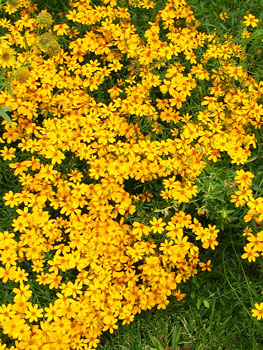
The Copper Canyon Daisies gave you a small taste of what they are capable of during the spring. Then they dropped their blooms and just stayed green throughout the summer months. Thats about to change as the fall is their primary blooming period. During this time, the blooms on this plant will be so numerous that you won’t be able to see the plant’s green leaves. They are truly spectacular.
Got questions? Fire away! Lets talk fall landscape duties!
Last edited by a moderator: