Welcome to the HornSports Forum

By registering with us, you'll be able to discuss, share and private message with other members of our Texas Longhorns message board community.

SignUp Now!

April Landscapes – Time for the Spring Show!

Sirhornsalot

**The Official Horn Sports Landscaper and Landscap
Joined
Nov 6, 2013
Messages
33,391
sg20190204_rose.jpg

Red Begonias

April is here! Time for the Show!

So many of you will be charging out to your local nurseries this month to buy flowers for your home beds. April 1 is typically the “safe date” for planting annual flowers in much of Texas. This month’s column will address this traditional adventure in the landscape with tips and advice.

How do you get started? Just get into the car?

It’s not that simple. Do not be an impulse landscape buyer. At least not in totality. Have a plan, make a list before you go to the nursery.

1. For Texas, there are roughly two annual flowers that will make it through our hot summers – Begonias and Perriwinkle (Vinca). Both are full sun lovers although there is a variety of Begonias better suited for shade. Begonias mostly come in red, white or pink while Perriwinkles come in white, lavender, pink, soft pink. There are some other colors but they may be hard to find.

Flower-garden.jpg

2. Do not plant your flowers in native soil. With a shovel, remove the native soil and replace with a quality landscape planter’s mix and combine with compost. Be careful not to plant your flowers too deep as they do not like staying wet very long. Dispose of the native soil you removed. Water thoroughly right after planting.

3. Aside from the primary annual flowers, you may want to accent with some other types of plants with height and color variations. Some good ones are Tropical Hibiscus, Crotons, Plumbago, and even Purple Fountain Grass. Center them in your beds and surround them with the annual flowers you chose.

gardening-madagascar-periwinkle2.jpg

Perriwinkle (Vinca)

4. Your flower display will be more impressive if you plant them close together. I like to call it “pack’em.” So many times I see flowers spread out to cover a certain amount of space in the bed. It is better to plant them in groupings, close together and leave space on the outside of the groupings. Vacant space isn’t a bad thing when your eyes are so pulled to the colorful display created when you “pack’em.”

5. What colors to choose? You can do an all one-color display, such as all-red Begonias and plant a yellow bloom Tropical Hibiscus in the middle. You can also do a two-color design. Or you can do a big splash of mixed colors. All are equally impressive. You can change it up every year, one reason to plan this out in advance.

6. About a week or two after planting your flowers, apply some flower food such as Carl Pool/Colorstar. Water in as soon as you’re done applying. Remember, nitrogen makes a plant thirsty so make sure they get enough water for the following two weeks or so. Do not wait to do this as you want this application to happen when its still relatively cool.

7. It is a good idea to plant what I call “deterrent flowers” in or near your annual flowers. This helps to keep them from being eaten by critters like rabbits. Two that come to mind are Marigolds and Society Garlic. Plant either or both of these in your garden, and the rabbits will steer clear. The Society Garlic, while a landscape plant, is a member of the onion family. Run your hands over the leaves and smell your hands. Its onion you smell. Rabbits can’t stand onions and will avoid the area if they’re present.

8. Mulching will be the final part of your planting process. This is where you do NOT want to mulch heavily. Annual flowers like to dry out in between waterings, so just a thin layer of mulch will do.

The Aftermath of The Storm

Many of you lost plant stock as a result of the winter storm we had weeks ago. Tons of residents in Texas have brown shrub lines. The Pittisporums, Indian Hawthorns, Lorapetalums and Palm Trees took the biggest hits in the landscape, most of which did not make it.

Be warned that nursery stock of these plants will be stretched thin this spring. We’re already having difficulty getting Hawthorns and Palms. I have been told that once Palm supplies are exhausted, we not see more until next season.

So it would be prudent to pursue those replacements now rather than wait – or – go a different direction with your replacements (different type of shrub).

You can help their recovery in cases where shrubs lost all of their foliage and are now budding back out – apply a mild granular fertilizer to your beds. I advise you to do this right before a rain event. Rain water has extra molecules of oxygen and when plants are supplied the extra oxygen in the water, they are able to absorb more nutrients, in this case – fertilizer. It makes for a dramatic bounce in growth and performance.

spreading-fertilizer.jpg

First fertilization of the Season!

You should now apply your first fertilization of the season. But before you proceed, make sure you understand the type of turf grass that you have and buy the appropriate type of fertilizer or weed/feed for that turf.

Why is this important? Bermuda turf, which is common in Texas, requires a higher amount of nitrogen in its fertilizer. Should the same fertilizer be applied to a St Augustine or Zoysia lawn, it would likely burn it up or damage it. Whats worse, you can’t stop the damage once the product has been put down.

Weed killers in Bermuda weed/feeds are also damaging to St Augustine and Zoysia turfs.

For Bermuda lawns, I recommend Scott’s Turfbuilder. Its just a solid product that brings great results. Read the back of the bag for recommended settings for your spreader. The nitrogen ratio in this product is 27.

For St Augustine, Zoysia or Centipede lawns, I recommend Fertilome St Augustine Weed & Feed. It is simply the best I’ve found for these particular turfs. The nitrogen ratio in this product is 15.

I advise my customers to water their lawns for two consecutive days after weed/feed or fertilizer application. This gets the product down into the root zone where it needs to be.

 
As always I appreciate your landscape thread.  I have a question which is directly opposite to what most gardeners want,  How do I kill out St Augustine grass from my Bermuda lawn.  My lawn was originally St Aug. but died out two years ago and I have been trying to encourage the Bermuda,  Now about 10% of the St Aug. is trying to come back. Any help will be appreciated.

 
Good stuff SH.   

Question: if I crap on the lawn and water it in, would I be able to tell code enforcement that I was fertilizing or is that considered open sewage?  what's your experience in this matter?  Y/K  LOL   

Robot-Confused.gif

 
Last edited by a moderator:
As always I appreciate your landscape thread.  I have a question which is directly opposite to what most gardeners want,  How do I kill out St Augustine grass from my Bermuda lawn.  My lawn was originally St Aug. but died out two years ago and I have been trying to encourage the Bermuda,  Now about 10% of the St Aug. is trying to come back. Any help will be appreciated.
Not SH, obviously, but had a similar experience when I first moved into my house.  I did not want the headache trying to keep St Augustine alive in my area (esp being away on deployments every 2-3 yrs) and surly did not want the maintenance cost, water bill and the time that my neighbors put into their lawns.  St Augustine looks great when maintained but is not native to this area and, because of that requires a commitment on the homeowner's part to keep it not just alive but healthy... or why have it?   

After fighting with this for about 5 yrs, I decided to go a different route and man am I glad I did.  I planted bermuda 411 in the front yard and buffalo grass in the back while encouraging native bermuda.  native bermuda and buffalo look very similar when cut so it's not an eyesore at all; unlike st augustine, both bermuda and buffalo are thin blade grasses.  I still have some St augustine that has stayed alive on the north side of the house where it isnt as hot and dry. When I trim, I take the st augustine runners that go over the driveway and plant them under trees in the back yard.  st augustine does better in the shade than bermuda and buffalo and it all blends in beautifully, IMO. 

Bermuda 411 is a hybrid that was established at TAMU, IIRC, so it is well adapted to the central Texas region.  What I like about 411 is that it isnt as aggressive as native bermuda and doesnt grow higher than about 4 inches.  I really only cut the front yard to knock down the wild grass spikes that shoot up to make it all look even about every 2-3 weeks.  I only water bermuda about once a week in the summer and not at all the rest of the year.  My bermuda in the front is thick and tight at about 2" in height but it isnt as soft as st augustine carpet grass.... I'll give that up for durability and maintenance cost any day. 

And, as a side note: If you think you will ever turn your home into a rental later, you'll wish you didnt spend all that money and time on a st augustine lawn.  My neighbors that had beautiful st augustine lawns 15-20 yrs ago have turned to crap after they moved and rented the homes out.  bermuda and buffalo are much more durable and hard to kill just out of neglect.

Just my opinion

 
Last edited by a moderator:
Soldierhorn

thanks for the reply.  I too have given up on the St A due to it being too much for me at my age.  I think there are certain weed killers that state to Not use on St A and I'm hoping I can use it to clean up my bermuda and at the same time do away with the returning St A.

 
Soldierhornthanks for the reply.  I too have given up on the St A due to it being too much for me at my age.  I think there are certain weed killers that state to Not use on St A and I'm hoping I can use it to clean up my bermuda and at the same time do away with the returning St A.
yep,  I tilled up my front lawn 15 yrs ago and brought in pallets of  411 bermuda (about $100 a pallet at the time).  I'm glad I did it but I have to admit, it was a lot of work and I would have to hire someone to do it now at my age. If a guy was going to live in a place only 3-5 yrs, then sod is really the only way to go. 

If you are not wanting to go the re-sodding route,  which admittedly is a lot of work,  I would recommend buying bags of bermuda & buffalo grass seed (some have both but I would buy separate bags just to make sure) and try seeding small sections every year.  At my age now, I would probably be able to work an area about 10 square yds and plan to do a different square every spring.  You will need to be able to water it regularly for about 4-6 weeks until it gets established and several times a week in the summer for the first year.  The thing of it is that the seed NEEDS contact with the soil so you will need to either till it or be able to rake it in in order to get some established.  Birds will be a problem; they like the seed so just throwing out seed is hit and miss due to bad soil contact and/or birds stealing the seed.  I've been doing this for years in my back yard and it's all starting to come together with virtually no maintenance or additional cost or time.  

If you havent seen it before, it's quite the site to see all the bees buzzing around low to the ground in the grass in my backyard. Buffalo grass produces little flowers (male flowers are near the ground & female flowers are at the top of the grass) that turn into buffalo grass seeds so it also reseeds itself.  I generally dont mow the buffalo grass in the spring for 2-3 months to allow this to happen.  Buffalo grass only grows about 4-6" in height and then it gently falls over and looks great - like a little green wave in the yard.  Buffalo grass is fantastic, however, it is slow growing and it takes years to expand the footprint in the yard and it also doesnt seem to get as thick as bermuda.  That being said based on my experience, I would seed equally with bermuda and buffalo and let the two fight it out for supremacy 

 
Last edited by a moderator:
As always I appreciate your landscape thread.  I have a question which is directly opposite to what most gardeners want,  How do I kill out St Augustine grass from my Bermuda lawn.  My lawn was originally St Aug. but died out two years ago and I have been trying to encourage the Bermuda,  Now about 10% of the St Aug. is trying to come back. Any help will be appreciated.
Just apply Turfbuilder w/weed killer. That should burn up the St Augustine and help your Bermuda.

 
Good stuff SH.   

Question: if I crap on the lawn and water it in, would I be able to tell code enforcement that I was fertilizing or is that considered open sewage?  what's your experience in this matter?  Y/K  LOL   

View attachment 3868
I will openly admit that I have had no experience on the subject. lol

 
Soldierhorn

thanks for the reply.  I too have given up on the St A due to it being too much for me at my age.  I think there are certain weed killers that state to Not use on St A and I'm hoping I can use it to clean up my bermuda and at the same time do away with the returning St A.
Bingo. 

 
yep,  I tilled up my front lawn 15 yrs ago and brought in pallets of  411 bermuda (about $100 a pallet at the time).  I'm glad I did it but I have to admit, it was a lot of work and I would have to hire someone to do it now at my age. If a guy was going to live in a place only 3-5 yrs, then sod is really the only way to go. 

If you are not wanting to go the re-sodding route,  which admittedly is a lot of work,  I would recommend buying bags of bermuda & buffalo grass seed (some have both but I would buy separate bags just to make sure) and try seeding small sections every year.  At my age now, I would probably be able to work an area about 10 square yds and plan to do a different square every spring.  You will need to be able to water it regularly for about 4-6 weeks until it gets established and several times a week in the summer for the first year.  The thing of it is that the seed NEEDS contact with the soil so you will need to either till it or be able to rake it in in order to get some established.  Birds will be a problem; they like the seed so just throwing out seed is hit and miss due to bad soil contact and/or birds stealing the seed.  I've been doing this for years in my back yard and it's all starting to come together with virtually no maintenance or additional cost or time.  

If you havent seen it before, it's quite the site to see all the bees buzzing around low to the ground in the grass in my backyard. Buffalo grass produces little flowers (male flowers are near the ground & female flowers are at the top of the grass) that turn into buffalo grass seeds so it also reseeds itself.  I generally dont mow the buffalo grass in the spring for 2-3 months to allow this to happen.  Buffalo grass only grows about 4-6" in height and then it gently falls over and looks great - like a little green wave in the yard.  Buffalo grass is fantastic, however, it is slow growing and it takes years to expand the footprint in the yard and it also doesnt seem to get as thick as bermuda.  That being said based on my experience, I would seed equally with bermuda and buffalo and let the two fight it out for supremacy 
Those are good things about Buffalo, however, don't fertilize it and don't spray a weed killer in it. It won't respond well.

One tip for a point you made about seeds, after spreading your seed, spread some topsoil as well. That way you have a higher rate of seed-to-soil contact.

 
Just wanted to post an observation and a heads up from last night...

I use a LOT of orange oil for many things including controlling pests in the yard.  Over the decades, I've tried just about anything and everything to fight red ants, including nematodes, diatomaceous earth, fuel, smoke, on and on.  While I still use nematodes and DE as a supplement, over the last 20 yrs or so my go-to tactic is to hit the mounds that do come up with diluted orange oil, which is biodegradable.  I use about 2 tablespoons to a gallon of liquid - usually just rain water.  the liquid can be pretty much anything that doesnt destroy the orange oil.  If you think the area needs help, you can add plant food, flat soda pop (sugar), honey, flat beer (sugar & yeast), etc, or you could just fill the gallon jug with urine (cuts down on the water bill LOL and urine turns to ammonia, then to nitrates-good for plant life).  

for years I focused on ants around my house foundation and driveway. every time a mound would pop up, I would hit it with several quarts of orange oil mix.  Now after winter, the mounds that do pop up look like they come from my neighbor's yards. The other day, after the rains, I noticed two large mounds coming in from the exterior fence and hit each with about a half-gallon of orange oil mix. Both were completely dead the next day. Sometimes I will see a small mound a couple of feet away but it doesnt mean the queen made it to that mound, just that the workers did their job in case the queen could make it; I hit it anyway with about a pint of orange oil mix and that usually kills that entire colony. 

Now all I do is check the yard and foundation to see if any mounds do pop up in order to get out of the moist ground.  Not trying to insult anyone's intelligence but just in case someone doesnt know, the ants build the mounds when the ground is wet to get the eggs out of the ground and in a little air flow so they dont get fungus & mildew.  This is when the colony is most vulnerable and the best time to hit them.  After a rain, I walk around the yard with a walking stick & a gallon of orange oil mix mainly to knock down mounds (if there are any) with the stick and then pour OO mix on it.  

The impetus for this writeup is that I was on Amazon looking to order some orange oil and the price was OUTRAGEOUS.  Every year I usually buy a quart or two of Medina Orange Oil since it works so well .  A quart of Medina Orange Oil use to cost $15-18 at the local box stores (including HEB) and I considered that a high price already.  Now on Amazon, a quart of medina orange oil cost $34 - wow. 

I've never tried it but a gallon of Howard Orange Oil on Amazon cost $40, which is $20/qt but it's a furniture finish mix so I'm not sure I trust it; would have to check ingredients. 

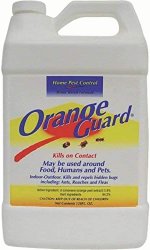
Orange Guard Home Pest Control is $40/gal on Ebay; also not horrible but still high, IMO, but will likely order it if I dont find something more reasonable

Anyway, I hope this helps someone

medina orange oil.jpg

orangeGuard.jpg

 
Last edited by a moderator:
Make sure you pee BEFORE using that stuff. lol. Orange oil stings on contact with human skin . . . and will transfer from skin to skin. You may not feel it much on your finger tips but you surely will in other places. lol

 
Heads up everyone. One of my sod vendors just raised St Augustine up to $215 per pallet. Thats up from $199 per pallet.

Order for cedar lumber I placed in February but am now just buying was then $1K and now is $1.8K.

There is no concrete in DFW through the weekend. Concrete plants cannot keep up with demand as they haven't been running full steam since the winter storm. Apparently, lots of hydraulics damage. So they are producing through the weekend, but not delivering anything until Monday. And of course, price of concrete is now going up.


City dwellers will think this is odd but it happens more often than people realize.  I the rural areas, there is till open sewage as well.  when I finish my workshop out in the country, I will build a small rest room with a dry toilet: essentially, a toilet seat with a bucket underneath containing some type of material such as sawdust or dirt. It will also have a bucket containing fresh material next to the toilet to cover the dookie. At some point, it can then be turned into the compost pile.  This is done all over the world.  

IIRC, the feces to be concerned about is cat feces.  Cat feces CAN contain (unlikely for indoor cats) a parasite that COULD be harmful. IF, however, you have a warm compost rather than a stagnant compost pile, the heat SHOULD kill the parasite if the compost gets to a certain temperature (130 deg for most and 150 for all, IIRC).  OTOH, cats dont produce enough manure to make much of a difference anyway so it's best to not include cat feces 

SH, correct me if I'm wrong on this.  

 
Last edited by a moderator:
2 hours ago, Soldierhorn said:


I don't think dog or cat feces have any real value to composting.

City of Austin makes a product called "Dillo Dirt" which is essentially composted human fecal matter. I've tried it on some plants. It was okay. I would never plant with it for vegetables or fruit, however, because I eat those things.

 
@Sirhornsalot, what is the best stuff to kill mold on palm trees?

BTW, good stuff as always Sir!
If you're talking about the growth that can occur near the bottom of the trunk, I would manually remove it with a good sharp knife.

If the mold is in the husky hairs of a Mediterranean Fan Palm, you can spray a liquid fungicide, probably two applications about two weeks apart.

The hairs can get fungus from being wrapped all winter. That should subside as the days get longer and hotter.

 
I don't think dog or cat feces have any real value to composting.

City of Austin makes a product called "Dillo Dirt" which is essentially composted human fecal matter. I've tried it on some plants. It was okay. I would never plant with it for vegetables or fruit, however, because I eat those things.
agree. your best fertilizers are grass eaters.  The least useful is probably meal eaters such as the diet we feed our cats and dogs.  

which begs the question: if a dog eats a grass eater, will he produce good manure?  ?

 
Last edited by a moderator:
Back
Top Bottom