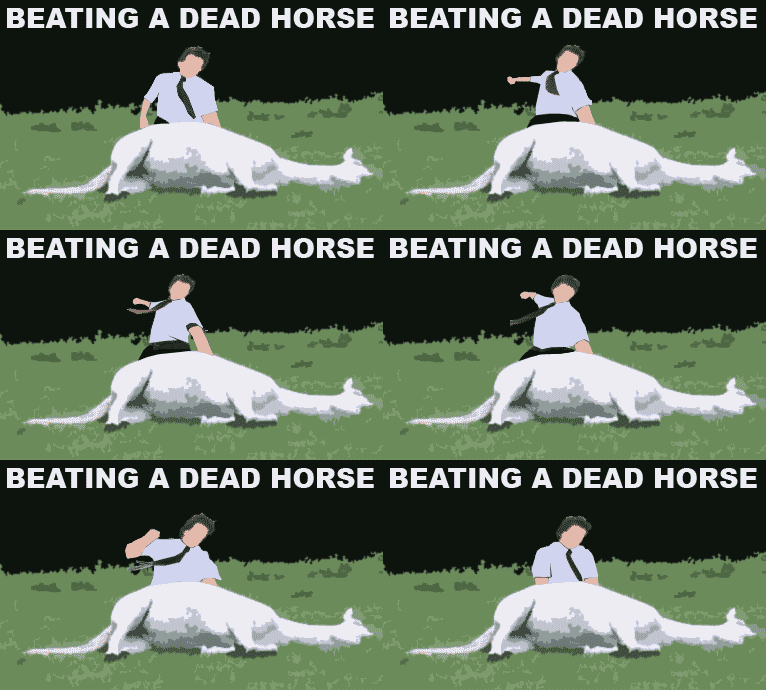

When you watch the Texas basketball team play you see flashes of a team that could be pretty good. But then you see the Longhorns fall back to earth and struggle in situations that ultimately lead to losses. 0-4 in Big 12 play, Texas is really having a tough time finishing games and finding an identity that will lead to wins. The struggles for Texas are a combination of problems, largely related to youth and inexperience. The team cannot keep it together long enough to pull out wins in games where they have still been in it in the very end. But no matter how they lose, each time I watch Texas I see two problems that stand out and are the difference between wins and losses.
The first problem I see may shed light to a lot of the Longhorn's problems. The interior of the offense and defense are just not reliable enough right now. When you watch the Longhorns you see a team that clearly has struggled with rebounding, especially on offense. Game after game, opposing teams have series on offense where they miss their first, and sometimes even second, shot attempts but continue to keep the ball because Texas can't rebound on offense effectively. One of my biggest keys to winning a basketball game is rebounding. Go look at the stats. The team that wins the rebound battle wins the games more times than not. And that's common sense because the team that wins the rebounding battle simply has more plays where they take the ball away from the other team. It's not considered a turnover in stat books, but it's essentially the same idea. The Texas big men, specifically Cameron Ridley and Prince Ibeh, also need to do a better job protecting the rim. Ridley and Ibeh do show up at times with blocks (and those are some of the flashes we see of good basketball) but more times than not I see these players standing right next to the opposing player that lays the ball up for an easy bucket. Or I see these guys get beat by shot fakes and get out of position. With the size of these two guys, there should not be a player any where near the bucket that is able to easily attempt a shot without at least one of those two trees making them hesitate or re-think their decision. But the two big guys are young and just not playing up to the game speed that they need to in order to be effective on defense.
The same could be said on the offensive side of the court. Texas seems to struggle the most on offense when the game slows down. Sure the team shows flashes of making shots, but their is no consistent source of scoring to turn to on offense. It's largely because Texas also does not have any reliable scorer down low to feed the ball to the interior of the opposing team's defense. The best big-man Texas has on offense is Jonathan Holmes. But as a 6'7" power forward, Holmes is often undersized against his opponents and has moved his scoring outside rather than trying to post someone up inside the paint (and honestly, Holmes needs to continue to develop his outside shot if he wants to play in the NBA). Having a lack of any reliable scoring threat down low forces the Longhorns to rely on jump shots any way they can get them. The only other way to improve their offense (other than having lights-out shooters) would be to have guys who can create their own shot by getting to the rim consistently. This would create some interior scoring threats to opposing defenses. Unfortunately, the only guy who has really shown he is capable of doing that is the shortest guy on the team, 5'10" (I really think he's 5'8") Javan Felix. When the lane is open, Felix has shown he can be a decent scorer getting to the basket. But because of his height, Felix has tailored his scoring to a pull-up jumper at the elbow. The problem with that is eventually teams can play better defense on him because he does not have a reliable 3-point shot, so the defender can essentially sag a few steps off and hang around the elbow where Felix likes to pull up for a jumper and then rely on their own big men to step in and block Felix if he does successfully get by the defender. So right now I see a team that relies heavily on jump shots from the outside.
The fact that Texas relies on jump shots also sheds light as to why they are taking many less free-throws than opposing teams. Sure there are calls in games against Texas that I don't agree with. But do not begin to think this is some big effort by the NCAA to screw Texas over in free-throws. Because it's not. It largely has to do with the style of basketball Texas is currently playing. If they don't have any interior offense, they likely will not get many fouls called on them. And if they don't have guard who can make something happen off the dribble, they will also not have fouls called on him. When you are a team that relies on jump-shots then the only way you get fouls is if a defender jumps into you while your shooting, which doesn't happen nearly as much compared to a team that has players that either take the ball to the rim or post players that bang around down low. So for now, get used to the fact that Texas will likely take less free-throws in games compared to the amount the opposing team is taking.
Just because Texas is struggling due to the fact that they have to rely on the jump shot does not mean you won't ever see another team that can win by relying on jump shots. There are definitely teams who find success by getting their players open and in positions to knock down shots. The problem for Texas is their inexperience and lack of offensive flow really hinders them from consistently finding spots on the floor for their shooters to knock down shots. The two guys that the Longhorns should be finding more shots for on offense are Sheldon McClelland and Julien Lewis. Those guys are the two best guards that can shoot for the Longhorns. Holmes is also a guy I'd like to see Texas run plays for, but he usually finds his shots when defenders forget to follow him to the 3-point line. I should be clear that I'm not saying the guards necessarily need more shots a game (McClellan just attempted 18 shots in the loss against KU). But the Longhorns should be running their offense to find more open shots for those two guys. A lot of the shots they take are contested, which lowers the percentage that the shot will go in. Instead of more than half of McClellan's shots being contested, Texas should find ways where less than half of his shots are contested. It isn't always easy to make happen, but when that is where your offense makes noise then you have to find a way to make it happen throughout the game.
The other problem Texas has really emerges late in games, and even late in first half's. Texas does not have a reliable "go-to" player that can close games/periods for them. When Myck Kabongo comes back he likely will have the first crack at being that guy. But as of right now they do not have anyone who can take the game over late and help the team hold on for a win. This largely has to do with the type of players, specifically guards, Texas has and their mentality. First, I do not trust the ball handling of any of the guards other than Felix (and Kabongo when he returns). So that initially makes it tough for the Longhorns to put the ball in any other guards hands beside Felix. Secondly, even if the ball is in the hands of Lewis, McClellan, or even Holland neither of them really do much on offense other than taking a jump-shot (as we went over earlier). Out of those 3, Holland has been the one guy who has sort-of shown he can get through traffic to the rim but he often struggles to finish the shot-attempt successfully (and like I just said, I don't really trust his ball-handling yet either. Not enough for him to have it late in games). So since these guys rely on jump shots, it makes it tough for any of these guys to step up in the final minutes. They aren't going to be dribbling around with the ball waiting to get fouled, or trying to take it to the rim to force the other team to foul before they attempt a lay-up. Lastly, I haven;t seen McClellan, Lewis, or Holland really show they even have the mentality or desire to want the ball the last few minutes of the game. They may be able to knock down shots late in games, but I haven't seen any of those guys want to close games over a span of a few minutes. Which basically leaves you with Felix as the guy who likely has the ball at the end of the game. Which isn't the ideal player you'd want with the ball. He can handle the ball well and has an "ok" free-throw percentage (77%, not automatic but decent), but Felix doesn't have the size to take it to the rim at will, and he does not have a reliable outside jump-shot. On the season, Javan is shooting 34% from the field (though in recent games that percentage has increased some). And he is shooting a very pedestrian and unreliable 17% beyond the 3-point line. So to sum it up, Texas really doesn't have an ideal player that can close games. And in result, Texas continues to lose some close games that they had within reach.
I said this a week or so ago, but it's like the Texas Men's basketball team is trying to play games with one hand tied behind their back. And they just can't seem to figure out how to untie that other hand. They are very frustrating to watch because they show flashes of good basketball. But in the end, their problems overtake their brief success in games and they end up losing. This team is also very young, so the problems do stem from lack of development and experience. And it will be very interesting to see the impact Kabongo will have when he returns. I think he will help the team, but I'm not convinced he completely fixes all of their problems. Rebounding, for example, is an effort play the whole team can improve on. Kabongo doesn't fix that. Regardless, I still think Texas could have a winning record right now instead of being 8-9, and 0-4 in Big 12 play. However, the Longhorns are currently fighting just to make the NIT at the end of the season, and this is easily the lowest point Rick Barnes has let his basketball program slip to.
The first problem I see may shed light to a lot of the Longhorn's problems. The interior of the offense and defense are just not reliable enough right now. When you watch the Longhorns you see a team that clearly has struggled with rebounding, especially on offense. Game after game, opposing teams have series on offense where they miss their first, and sometimes even second, shot attempts but continue to keep the ball because Texas can't rebound on offense effectively. One of my biggest keys to winning a basketball game is rebounding. Go look at the stats. The team that wins the rebound battle wins the games more times than not. And that's common sense because the team that wins the rebounding battle simply has more plays where they take the ball away from the other team. It's not considered a turnover in stat books, but it's essentially the same idea. The Texas big men, specifically Cameron Ridley and Prince Ibeh, also need to do a better job protecting the rim. Ridley and Ibeh do show up at times with blocks (and those are some of the flashes we see of good basketball) but more times than not I see these players standing right next to the opposing player that lays the ball up for an easy bucket. Or I see these guys get beat by shot fakes and get out of position. With the size of these two guys, there should not be a player any where near the bucket that is able to easily attempt a shot without at least one of those two trees making them hesitate or re-think their decision. But the two big guys are young and just not playing up to the game speed that they need to in order to be effective on defense.
The same could be said on the offensive side of the court. Texas seems to struggle the most on offense when the game slows down. Sure the team shows flashes of making shots, but their is no consistent source of scoring to turn to on offense. It's largely because Texas also does not have any reliable scorer down low to feed the ball to the interior of the opposing team's defense. The best big-man Texas has on offense is Jonathan Holmes. But as a 6'7" power forward, Holmes is often undersized against his opponents and has moved his scoring outside rather than trying to post someone up inside the paint (and honestly, Holmes needs to continue to develop his outside shot if he wants to play in the NBA). Having a lack of any reliable scoring threat down low forces the Longhorns to rely on jump shots any way they can get them. The only other way to improve their offense (other than having lights-out shooters) would be to have guys who can create their own shot by getting to the rim consistently. This would create some interior scoring threats to opposing defenses. Unfortunately, the only guy who has really shown he is capable of doing that is the shortest guy on the team, 5'10" (I really think he's 5'8") Javan Felix. When the lane is open, Felix has shown he can be a decent scorer getting to the basket. But because of his height, Felix has tailored his scoring to a pull-up jumper at the elbow. The problem with that is eventually teams can play better defense on him because he does not have a reliable 3-point shot, so the defender can essentially sag a few steps off and hang around the elbow where Felix likes to pull up for a jumper and then rely on their own big men to step in and block Felix if he does successfully get by the defender. So right now I see a team that relies heavily on jump shots from the outside.
The fact that Texas relies on jump shots also sheds light as to why they are taking many less free-throws than opposing teams. Sure there are calls in games against Texas that I don't agree with. But do not begin to think this is some big effort by the NCAA to screw Texas over in free-throws. Because it's not. It largely has to do with the style of basketball Texas is currently playing. If they don't have any interior offense, they likely will not get many fouls called on them. And if they don't have guard who can make something happen off the dribble, they will also not have fouls called on him. When you are a team that relies on jump-shots then the only way you get fouls is if a defender jumps into you while your shooting, which doesn't happen nearly as much compared to a team that has players that either take the ball to the rim or post players that bang around down low. So for now, get used to the fact that Texas will likely take less free-throws in games compared to the amount the opposing team is taking.
Just because Texas is struggling due to the fact that they have to rely on the jump shot does not mean you won't ever see another team that can win by relying on jump shots. There are definitely teams who find success by getting their players open and in positions to knock down shots. The problem for Texas is their inexperience and lack of offensive flow really hinders them from consistently finding spots on the floor for their shooters to knock down shots. The two guys that the Longhorns should be finding more shots for on offense are Sheldon McClelland and Julien Lewis. Those guys are the two best guards that can shoot for the Longhorns. Holmes is also a guy I'd like to see Texas run plays for, but he usually finds his shots when defenders forget to follow him to the 3-point line. I should be clear that I'm not saying the guards necessarily need more shots a game (McClellan just attempted 18 shots in the loss against KU). But the Longhorns should be running their offense to find more open shots for those two guys. A lot of the shots they take are contested, which lowers the percentage that the shot will go in. Instead of more than half of McClellan's shots being contested, Texas should find ways where less than half of his shots are contested. It isn't always easy to make happen, but when that is where your offense makes noise then you have to find a way to make it happen throughout the game.
The other problem Texas has really emerges late in games, and even late in first half's. Texas does not have a reliable "go-to" player that can close games/periods for them. When Myck Kabongo comes back he likely will have the first crack at being that guy. But as of right now they do not have anyone who can take the game over late and help the team hold on for a win. This largely has to do with the type of players, specifically guards, Texas has and their mentality. First, I do not trust the ball handling of any of the guards other than Felix (and Kabongo when he returns). So that initially makes it tough for the Longhorns to put the ball in any other guards hands beside Felix. Secondly, even if the ball is in the hands of Lewis, McClellan, or even Holland neither of them really do much on offense other than taking a jump-shot (as we went over earlier). Out of those 3, Holland has been the one guy who has sort-of shown he can get through traffic to the rim but he often struggles to finish the shot-attempt successfully (and like I just said, I don't really trust his ball-handling yet either. Not enough for him to have it late in games). So since these guys rely on jump shots, it makes it tough for any of these guys to step up in the final minutes. They aren't going to be dribbling around with the ball waiting to get fouled, or trying to take it to the rim to force the other team to foul before they attempt a lay-up. Lastly, I haven;t seen McClellan, Lewis, or Holland really show they even have the mentality or desire to want the ball the last few minutes of the game. They may be able to knock down shots late in games, but I haven't seen any of those guys want to close games over a span of a few minutes. Which basically leaves you with Felix as the guy who likely has the ball at the end of the game. Which isn't the ideal player you'd want with the ball. He can handle the ball well and has an "ok" free-throw percentage (77%, not automatic but decent), but Felix doesn't have the size to take it to the rim at will, and he does not have a reliable outside jump-shot. On the season, Javan is shooting 34% from the field (though in recent games that percentage has increased some). And he is shooting a very pedestrian and unreliable 17% beyond the 3-point line. So to sum it up, Texas really doesn't have an ideal player that can close games. And in result, Texas continues to lose some close games that they had within reach.
I said this a week or so ago, but it's like the Texas Men's basketball team is trying to play games with one hand tied behind their back. And they just can't seem to figure out how to untie that other hand. They are very frustrating to watch because they show flashes of good basketball. But in the end, their problems overtake their brief success in games and they end up losing. This team is also very young, so the problems do stem from lack of development and experience. And it will be very interesting to see the impact Kabongo will have when he returns. I think he will help the team, but I'm not convinced he completely fixes all of their problems. Rebounding, for example, is an effort play the whole team can improve on. Kabongo doesn't fix that. Regardless, I still think Texas could have a winning record right now instead of being 8-9, and 0-4 in Big 12 play. However, the Longhorns are currently fighting just to make the NIT at the end of the season, and this is easily the lowest point Rick Barnes has let his basketball program slip to.