

Coleman Feeley
On the line
- Joined
- Dec 21, 2013
- Messages
- 177

submitted 7 hours ago in Texas Longhorns Football By Coleman Feeley
From humble beginnings on prep-school school yards to the hundred-million dollar stadiums of 2015, football has seen many changes. The under-center snap, the forward pass, the 2-point conversion, and ‘the gun’ all pale in comparison to football’s newest trend - swag.
For many older football fans the only feeling that a new jersey with an alternate color provides is heartburn. Meanwhile, up and coming college-age athletes revel in the advancements of Nike’s ‘DRI-FIT’ gear and the accessories they can add to their uniform. Gloves, head bands, low socks, wristbands, wristbands that go on your calves, half sleeves, and visors have become fixtures instead of luxuries.
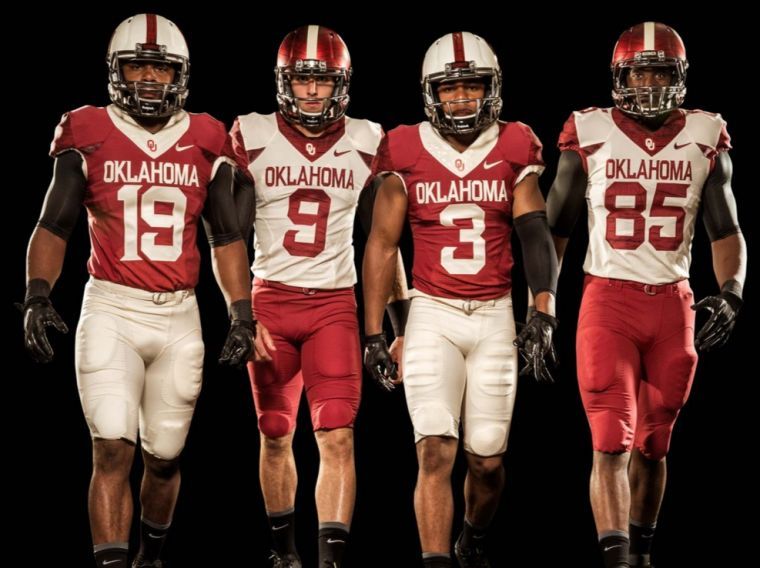
It’s difficult to determine when or why this trend began, but there is no denying its momentum and profit. The ‘Uniform Arms Race’ is well underway (Image 1).

Today, some players hardly realize that “pretty boy†is an insult. The Millennials that are entering the ranks of division one football never lose sight of the purpose of this game; however, they do want to look good while playing. Luckily for them they are blessed to live in a country that honors capitalism and the ventures unto which capitalism supports.
In 2010 Nike began a new and bold alternate uniform campaign called ‘Nike Pro Combat’, their slogan read “prepare for combat†and was met with rave reviews (Image 2).

Miami, Virginia Tech, Boise State, Florida, Ohio State, Oregon State, TCU, Alabama, West Virginia, and Pittsburgh all received the new ‘alternates’ symbolically firing the first shot.
The race was on.
By entering a majority of the power conferences, Nike captured the attention of high school athletes everywhere, sparking their desire to win games in the freshest uniforms available and, not surprisingly, the schools that boasted Nike Combat uniforms saw a spike in recruitment (not to mention another new jersey available for purchase in the fan store).
Each year players eagerly await the release of their university’s new uniforms, and now find additional motivation in Nike’s Playoff uniforms. Currently, The University of Oregon, Nike’s test marketing incubator, has over 17,000 possible uniform combinations – they could wear a new uniform every game until the year 3344!
Not to be outdone Nike’s largest rival, Under Armour, has revealed several new alternates at a number of universities including their flagship university, The University of Maryland. Showing off the state flag, Maryland’s ‘State Pride’ uniforms excited (and confused) fans across America (Image 3).

Each year colleges make changes to their uniforms in attempt to stay ahead of the curve. However subtle, Longhorn fans are seeing glimpses of the changes that almost invariably lay ahead. While they’re only worn in practice, the player’s desire for a change was heard and in 2012 UT changed practice uniforms (image 4).

The change was not met with grand reviews from the fans of Texas, but it still happened. And even though a change in uniform was met with stout opposition in 2013, Texas made a subtle change to the game time uniform by honoring the past with a ‘throwback’ helmet (Image 5).

Even more subtlety lays in the changes made in Coach Strong’s first year at Texas. UT changed the color of the Longhorn emblem displayed on the Texas helmet (Image 6).

Whether you’re behind the movement or standing in its path, the race is on. Colleges will continue to update and modify their look to stay with the times and more importantly gain momentum with younger athletes.
However, the ‘Uniforms Arms Race’ was not the beginning of the swag movement. In the 1970’s Billy “White Shoes†Johnson exhibited his flair for the dramatic with elaborate touchdown celebrations and of course, his white shoes.
Keeping the same passion for showmanship in the 1990’s, Deon “Primetime†Sanders celebrated in similar fashion with his trademark high-step and bandana. Sanders’ quote is actually one of the more memorable statements defending this movement, “If you look good, you feel good. If you feel good, you play good. If you play good, they pay good!â€